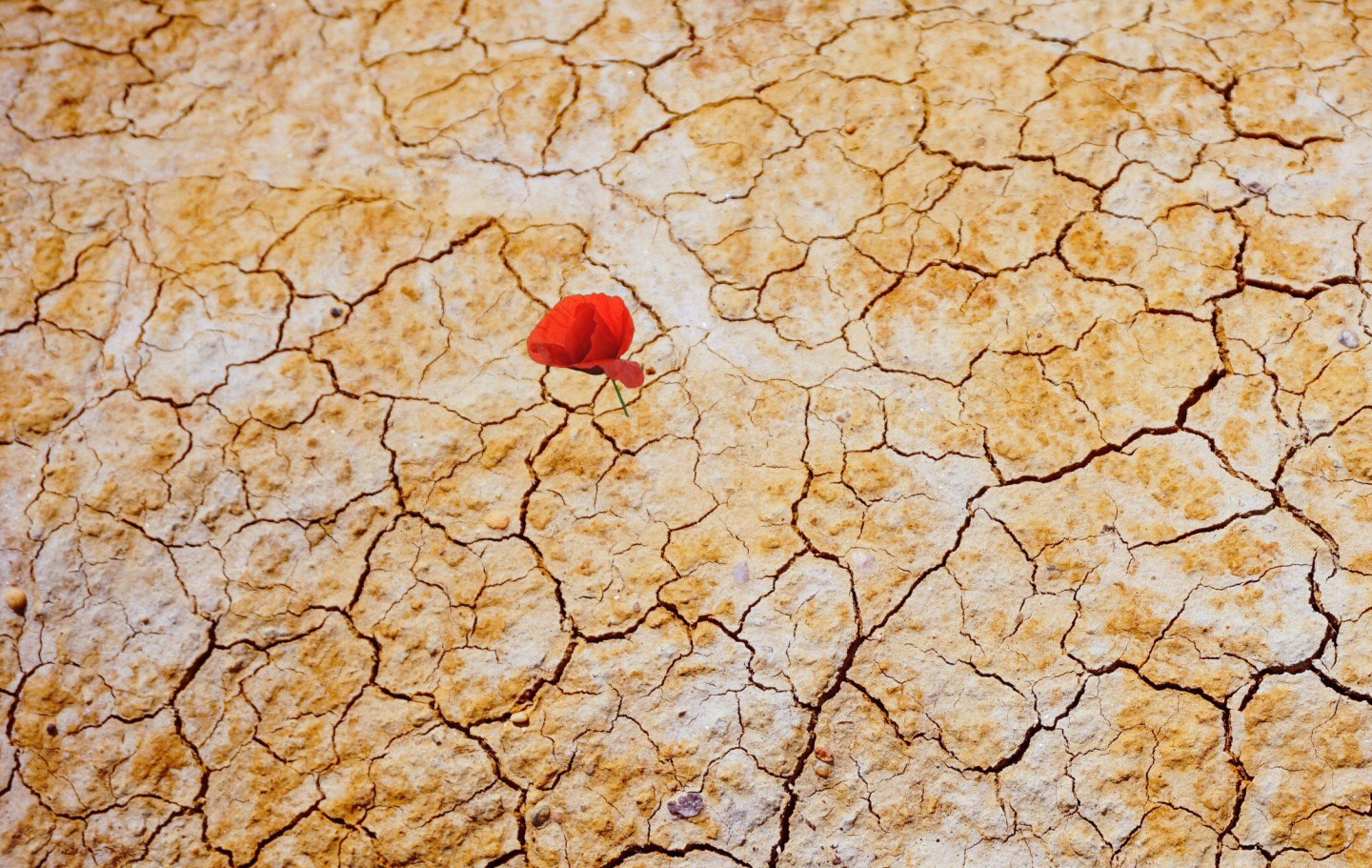
My flight takes off from Delhi Airport, the ancient city below wearing an impenetrable cloak of smog. The desperate morning sun, exhausted from its exertions in penetrating the haze, seems to be asking a burning question. Will what has survived and thrived for three millennia be there in another fifty years? Recent research on climate change co-led by scientists at Massachusetts Institute of Technology augurs a grim future.
As my plane banks west, rising towards the majestic Karakoram-Himalayan mountain ranges, the outlines of the Delhi Ridge are discernible below. This geologic formation separates the two parts of the vast Indo-Gangetic plains. A region of many large and small rivers, it was formed tens of millions of years ago by the Indian tectonic plate colliding with the Eurasian plate, creating the Himalayas. The subsequent melting of glaciers on the high mountains fed rivers as mighty as the Indus and the Ganga and created a vast 255 million hectare fertile plain.
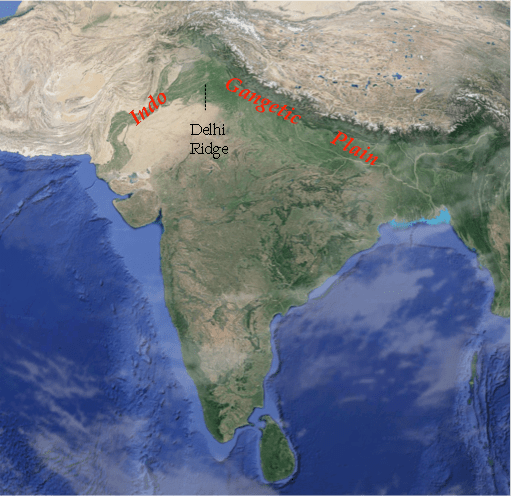
Today the area stretches from eastern Pakistan through much of north and east India into Bangladesh. Over one billion people live here and it’s fertile soil has made it the agricultural breadbasket of three countries with a collective population approaching two billion. To put that in perspective, almost one in five people on the planet rely on the environmental health of this vast ecosystem. And things look dire.
The M.I.T. research suggests that on the current trajectory of global emissions, levels of heat and humidity in this region during the summer months could exceed natural human survival limits by the turn of the century. These heat waves, which would begin in the next few decades, have the potential of displacing over 300 million people and severely impacting the food supply of South Asia. Dire indeed!
An article, published recently in the journal Science Advances, by a team co-led by Professor Elfatih Eltahir of M.I.T., laid out the case. The following excerpts captures the essence of the argument and a brief video details the research.
The new analysis is based on recent research showing that hot weather’s most deadly effects for humans comes from a combination of high temperature and high humidity, an index which is measured by a reading known as wet-bulb temperature. This reflects the ability of moisture to evaporate, which is the mechanism required for the human body to maintain its internal temperature through the evaporation of sweat. At a wet-bulb temperature of 35 degrees Celsius (95 degrees Fahrenheit), the human body cannot cool itself enough to survive more than a few hours.
Historically wet-bulb temperatures have never approached 35 degrees Celsius in most places in the world. However, the research showed that the Persian Gulf began witnessing those ranges in 2015. South Asia is not that far behind. In fact, the summer of 2015 was one of the deadliest in recent memory, with thousands of people perishing in heat related deaths in South Asia.
Should any action on climate change be insufficient or delayed, the consequences for the security, politics and economics of the world will be devastating. Hundreds of millions of refugees would imperil the security of two nuclear states already in a low intensity conflict. Food prices would rise astronomically all over the world. Beyond these tangible effects, the demise of a region that is the cradle of one of the world’s oldest civilizations and several of its major religions would be an indelible blot on the human canvas.
There is still time to react. A collective global effort to reduce emissions may yet yield results. Count me as one of the skeptics on this front. The Paris accords are too vague, have no enforcement mechanisms and have recently lost support of one of its critical protagonists, the United States (which also happens to be the second largest emitter of greenhouse gases).
Therefore, the answer must lie in human ingenuity and inventiveness. There is no more urgent an area of technological investment than finding solutions to the problems outlined above. Short of moving hundreds of millions of people and finding millions of hectares of arable land, we will have to create and invent technologies that mitigate the effects of climate change. Several areas of exploration hold promise.
Creating cheap, lightweight clothing that cools the skin would enable people to tend to their lands in hotter weather. Dramatically reducing the cost of building materials and air-conditioning through the use of renewable energy and nanotechnology would enable appropriate housing to be built. New forms of micro-agriculture, some of it done indoors, would counter the increasing fallowness of the land. And the list goes on.
These ideas currently do not capture the fancy of venture capitalists, as they chase the latest artificial intelligence or social media innovation. Hopefully, there are forward thinking investors, in government and the private sector, who see the tremendous potential of the innovations that mitigate the severe risk of climate change for billions of people. In addition to being financially successful, these investors, and the scientists they support, would literally be saving a large swathe of humanity. Now that is an investment with infinite returns.
 Chats on the Charles
Most basic human right is not freedom (as we in the west conceive of it) but physical security. Paraphrasing a 17C Hobbs.
LikeLike
Well said by the 21st century Hobbs. Thanks Jerry.
LikeLike
Hot weather, reduced monsoons, water shortage leading to bad harvests and ultimately famine is a very realistic mid term threat.
LikeLike