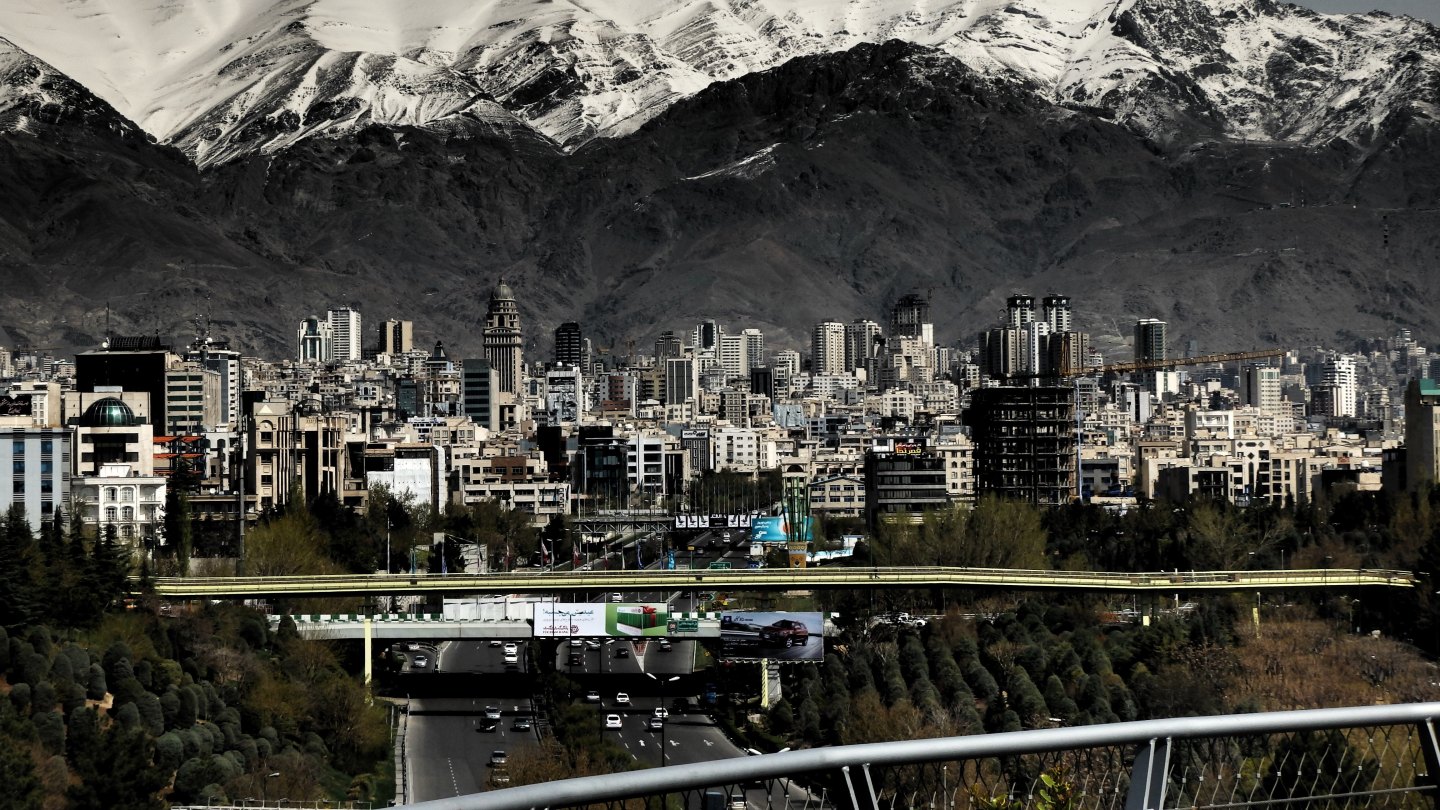
Yesterday was the two year anniversary of the Joint Comprehensive Plan of Action (JCPOA or the Iranian nuclear deal). President Trump’s recent decisions have brought the deal back into focus. While it is unclear what the White House’s policy goals are in unilaterally decertifying Iranian compliance, it is important to re-articulate the U.S. and Iranian objectives in signing the JCPOA. As is the case with all such major international agreements, each side made a series of calculations about signing up to the Joint Comprehensive Plan of Action (JCPOA) and the trade-offs associated with it. Highlighting these considerations will illustrate the strategic error of the President’s actions.
By the beginning of the 21st century, the great and ancient Persian nation was living through a long period of relative decline. Malevolent monarchs and messianic mullahs had wrecked havoc on a proud people who among other achievements gave the world one of its oldest civilizations, and one of its first monotheistic religions (strongly influencing Judaism and Christianity). In Iranian history these periods of relative decline were followed by catastrophic interventions, mostly from Arab and European powers. The clerical regime in Tehran viewed the United States, Israel and Saudi Arabia through this prism.
By 2004, after the fall of Saddam Hussein and the Taliban, Iran was surrounded by American bases in Iraq, Afghanistan and Bahrain. “Mission Accomplished” triumphalism in Washington had rebuffed an overture from Iran and there was talk about moving on from Iraq to tackle the next member of the so-called Axis of Evil. It was in this context that the Iranians decided to restart their nuclear weapons program, originally conceived by the Shah of Iran in the 1970s.
Iran made rapid technological progress in the next decade. In one of the ironies of global politics, this advance was aided and abetted by the Pakistani military and nuclear establishment, a “major non-Nato ally” of the United States. By 2014, despite assassinations of several of its nuclear scientists and hostile cyber warfare, Iran was within months of being able to produce and test nuclear weapons. Acquiring this capability however came at a considerable cost to the Iranian economy in the form of international sanctions. The resulting economic hardship, while mitigated by rising oil prices throughout that decade, had periodically threatened the survival of the clerical regime.
Iran had three major strategic imperatives in signing the JCPOA. The first was to legally preserve the technical capability and infrastructure to build a nuclear bomb. For reasons of national pride and deterrence no Iranian regime could afford to forgo that costly progress. The second was to achieve sanctions relief and provide an economic lifeline to the regime which had started to witness a precipitous decline in the price of oil. The third was to protect the nuclear infrastructure from attack. The Iranian government perceived the United States and Israel as the only two countries capable of attacking the Iranian facilities and rightly believed an agreement with the United States would deter Israel as well.
On the opposite side of the negotiating table sat the United States, with its own set of compulsions pushing it to a deal. The decade after 2004 had made America realize the limitations of its regime change and nation building policies in Iraq and Afghanistan. The Great Recession of 2008 had also focused our attention inward as we grappled with anemic economic growth and stretched government finances. And finally the shale oil revolution had made our dominance of the Middle East region less strategic than it had been for the preceding decades.
As past history with China, Israel, India, Pakistan and North Korea had shown, anything short of military intervention does not stop a determined nation from pursuing a nuclear weapon. While a nuclear armed Iran was an anathema to the U.S. security establishment, it was not prepared to go to war to stop Iranian progress towards a bomb. The unresolved and draining conflicts in Iraq and Syria, the lack of popular support for another Middle Eastern conflict, coupled with a confluence of interest in containing ISIS created a window of opportunity for the United States to explore a diplomatic deal with Iran.
At the heart of the JCPOA is a fifteen year freeze of the Iranian nuclear program, in essence kicking the proverbial can down a very long road. In addition, it extends the time Iran would need to develop a weapon from weeks to at least a year. This is done by reducing the stockpiles of enriched uranium in Iran and intrusive monitoring of all its declared facilities.
Iran’s strategic calculation was relatively simple to discern. It would get a major economic boost from the sanctions removal and the repatriation of its assets from Europe and the United States. In addition, it would retain all the knowledge and the infrastructure to restart the program in 2030 should its strategic calculus necessitate that. The ensuing time would also allow the Iranian military to strengthen its conventional deterrence vis a vis Israel by arming Hezbollah, Syrian Shia militias and Palestinian groups in the Gaza and West Bank.
The U.S. calculus was more nuanced. Having explicitly decided that the Iranian nuclear program was not worth going to war over, the U.S. wanted to buy time by freezing the program. It believed that two factors would work together in the ensuing fifteen years to bring about a change in the Iranian strategic calculations about the benefits of having the nuclear program. First the demographic changes in Iran would put pressure on the regime to reform and democratize. As was seen in the Green protests after the elections of 2009, young Iranians chafed at the controls of the clerics and their security apparatus. A more democratic Iran would likely not view the nuclear card as essential.
Second, and perhaps more importantly, the U.S. believed that as the world became less dependent on fossil fuels, the Iranians would need to radically restructure their economy by 2030, and therefore be more susceptible to engagement with the West. Interestingly one of the lead negotiators on the U.S. delegation, Professor Ernest Moniz, as Energy Secretary, had forcefully championed renewable energy and battery storage technologies. And finally, if all that failed, the military option remained on the menu for 2030, perhaps with more viability if the Iraq and Afghanistan wars had subsided.
Two years later the United States is thinking about withdrawing from the deal. Iran has made it clear that should the U.S. withdraw it will not consider itself bound to the commitments it made in the deal. Our strategic position has weakened in these two years. Iran has strengthened Hezbollah and its Syrian proxies such that Israel could endure significant casualties in retaliation against an attack on Iranian infrastructure. The vast amount of money Iran received has stabilized its economy. It has also begun to reengage with Europe and China in meaningful economic ways. Meanwhile Iraq and Afghanistan continue to smolder and to that pile we have added the burdens of the failed states of Libya, Syria and Yemen. The U.S. military would rather not endure another major conflagration in the Middle East, this one directly involving U.S. troops. Therefore, unless we are prepared to go to war in the Middle East, it is best we continue to stay in the agreement and give our two major strategic wagers time to come to fruition.
Personally I believe they will. Iranian society is sophisticated and strong and will throw away the yoke of oppression. As the resilient young women characters from the New York Times best seller Reading Lolita in Tehran demonstrate, the Iranian yearning for freedom will eventually shine through. Couple that with the innovation and ingenuity of companies like Tesla which are ushering in the new era of reduced dependence on fossil fuels and fifteen years from now the JCPOA will likely be judged to be a success. The U.S. would have avoided another significant entanglement in the Middle East and a new Persian nation would be emerging, ready to engage constructively with the world. I imagine thousands of electric cars, autonomously driving through the streets of Tehran, with young men and women sitting in them, feeling free to read the currently forbidden literature of Vladimir Nabokov. Inshallah (God willing), as the Persians would say.
 Chats on the Charles
Leave a comment